30 seconds summary
- Raising kids to care for aging loved ones involves teaching empathy, responsibility, and the importance of family care. Parents can model compassion through actions like visiting elderly relatives, helping with chores, or discussing the aging process.
- Encourage kids to understand the needs of older adults and the value of supporting them. Teach patience, respect, and problem-solving as part of fostering a sense of responsibility.
- It’s essential to instill the idea that caregiving is a shared family duty, helping kids develop both emotional intelligence and practical skills to support aging loved ones with dignity.
As the global population ages, the importance of teaching younger generations how to care for aging loved ones becomes increasingly vital. A significant aspect of this caregiving journey is teaching empathy and responsibility to children, so they grow up with an understanding of the needs of the elderly and a sense of duty to support them. Raising kids who are not only compassionate but also prepared for the responsibility of caring for aging loved ones requires intentional efforts, patience, and thoughtful guidance. This approach not only benefits the elderly but also enriches the lives of children by instilling important values such as respect, compassion, and intergenerational connection.
The Role of Empathy in Caring for Aging Loved Ones
Empathy is the cornerstone of caregiving. When children develop the ability to understand and share the feelings of others, particularly those of elderly relatives, they learn to provide more compassionate care. However, empathy is not an innate trait—it needs to be nurtured and cultivated. By teaching children to recognize and respond to the emotions and needs of their aging family members, parents can help them understand the challenges that come with aging, such as physical limitations, cognitive decline, and emotional isolation.
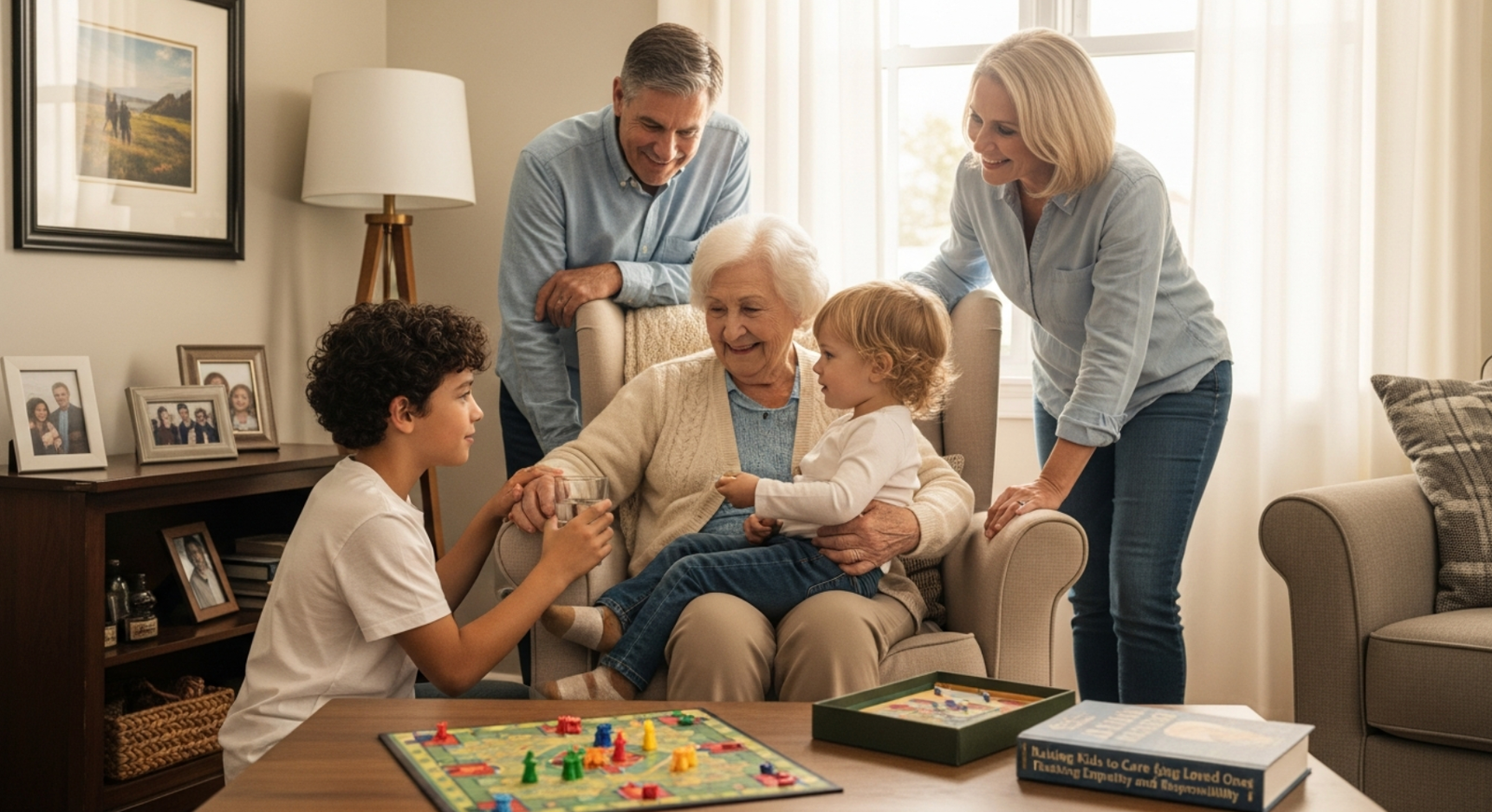
One of the first steps in teaching empathy is to encourage children to engage with their aging loved ones in meaningful ways. For example, children can spend time listening to stories about their grandparents’ lives, helping with small tasks like writing letters, or simply sitting with them and engaging in conversations. These moments foster connection and give children the opportunity to observe the emotional and physical vulnerabilities that their aging family members face.
Additionally, teaching children to observe and recognize non-verbal cues, such as facial expressions and body language, is crucial. Seniors may not always be able to articulate their needs or feelings, so understanding subtle signs of discomfort or sadness can help children respond appropriately.
Fostering a Sense of Responsibility
Caring for aging loved ones requires more than just empathy—it also necessitates a sense of responsibility. Children need to understand that the well-being of their elders is not just a matter of emotional connection but also a shared duty within the family. This sense of responsibility can be cultivated by involving children in caregiving tasks at an early age.
While some caregiving tasks may be too complex for younger children, there are many ways they can contribute meaningfully. Simple actions like setting the table for family meals, helping with household chores, or assisting with medication reminders can be a way for children to feel a sense of purpose and accountability. By assigning age-appropriate tasks, parents can teach children that caring for others is not just an option but a moral obligation that reflects love, respect, and responsibility.
Moreover, involving children in the decision-making process about caregiving can help them understand the broader picture. For example, children can help in organizing visits to healthcare professionals or making decisions about home modifications to accommodate an elderly family member’s needs. These discussions provide valuable opportunities to educate children about the logistics of caregiving and the importance of planning and problem-solving in these situations.
Teaching Children to Adapt to the Changing Needs of Aging Loved Ones
The needs of aging individuals often change over time, and teaching children to adapt to these changes is an essential part of the caregiving process. As a loved one ages, they may experience health issues that affect their mobility, cognitive function, or emotional well-being. It is important for children to learn that caregiving is a dynamic, evolving process that requires flexibility and patience.
For instance, a grandparent may initially be independent and able to manage most daily tasks but later require assistance with dressing, eating, or bathing. Children can be taught to adjust their level of involvement as these needs arise, always striving to meet their loved ones where they are. It is also essential to educate children about the importance of seeking professional help when needed, such as in-home care providers, therapists, or medical specialists.
By observing and engaging in these caregiving changes, children learn resilience and adaptability, which are valuable life skills in their own development.
Practical Ways to Teach Empathy and Responsibility
- Model Compassionate Behavior:
Children learn a great deal from observing the behavior of the adults around them. By modeling empathetic and responsible caregiving, parents and caregivers can show children how to interact with aging loved ones in a respectful and compassionate manner. This includes demonstrating patience when a senior struggles with memory loss or mobility issues, as well as offering gentle assistance when necessary. - Encourage Communication:
Encouraging children to communicate openly with aging loved ones can help foster empathy. Children can be taught to ask thoughtful questions and actively listen when their elders share their experiences. This not only strengthens the emotional bond between the generations but also allows children to gain a deeper understanding of the challenges their loved ones face. - Involve Children in Caregiving Tasks:
As mentioned, giving children age-appropriate tasks can be an effective way to instill a sense of responsibility. These tasks might include helping an elderly loved one with their personal care, assisting with transportation to medical appointments, or preparing meals. As children get older, they can take on more complex responsibilities, such as managing medications or coordinating schedules. - Create Intergenerational Experiences:
Foster an environment in which children have frequent, meaningful interactions with their elderly loved ones. This can include shared activities such as cooking, gardening, arts and crafts, or storytelling. These experiences not only allow children to bond with their elders but also teach them the value of spending quality time with older individuals. - Use Books and Media:
There are many books, movies, and shows that address the themes of aging, caregiving, and empathy. Reading stories about aging or watching media that showcases the experiences of older adults can help children better understand the realities of growing older and inspire them to be more compassionate toward their aging family members. - Promote Volunteering:
Encouraging children to volunteer in community programs that serve the elderly can be a powerful way to teach empathy and responsibility. Volunteering at nursing homes, senior centers, or local healthcare facilities exposes children to the needs of the elderly and gives them hands-on experience in providing care and support. - Discuss the Impact of Aging:
Conversations about aging and the eventual need for care should be an open part of family life. These discussions help normalize the concept of caregiving and make it clear that caring for an aging loved one is an important and natural part of family life. They also provide an opportunity to educate children on the importance of long-term planning, including discussions around finances, legal matters, and healthcare options.
The Role of Companion Care Services
While teaching children to care for aging loved ones is essential, it is important to acknowledge that not every caregiving responsibility can be managed within the family. Companion care services play a crucial role in supporting families and providing professional assistance. Companion care refers to non-medical services that assist elderly individuals with daily activities, emotional support, and companionship.
Companion care services can be particularly helpful in situations where an aging loved one requires assistance but does not need intensive medical care. These services may include help with meal preparation, housekeeping, transportation to appointments, and personal care, as well as providing social interaction and emotional support.
For families, companion care services can provide a sense of relief and assurance that their loved one is receiving the care and attention they need. By supplementing family caregiving efforts, companion care services help reduce caregiver burnout, improve the quality of life for elderly individuals, and allow children to focus on their relationship with their loved ones without feeling overwhelmed by the daily tasks of caregiving.
When children are introduced to companion care services, it can also provide them with an understanding of the diverse ways in which elderly individuals can be supported. Exposure to professional caregiving can broaden their perspective and teach them the importance of seeking help when necessary.
Conclusion
Raising children to care for aging loved ones is not a task that can be accomplished overnight. It requires consistent effort, modeling, and open communication. By teaching children empathy, responsibility, and adaptability, parents can help them develop the skills and values necessary for providing compassionate and effective care for the elderly.
Moreover, by introducing children to the realities of caregiving and involving them in the process, families can strengthen intergenerational bonds and create a culture of caregiving that extends beyond the individual family unit. As children grow up with a deep understanding of the needs of aging loved ones, they will be better equipped to navigate the challenges of caregiving themselves and will carry forward the lessons of empathy and responsibility into their own futures.
In addition to family caregiving, professional services like companion care can provide valuable support, offering families peace of mind and ensuring that elderly individuals receive the care they need. Ultimately, the goal is to create a society where caregiving is viewed not as a burden but as a shared responsibility that fosters dignity, respect, and connection for all generations.