30 seconds summary
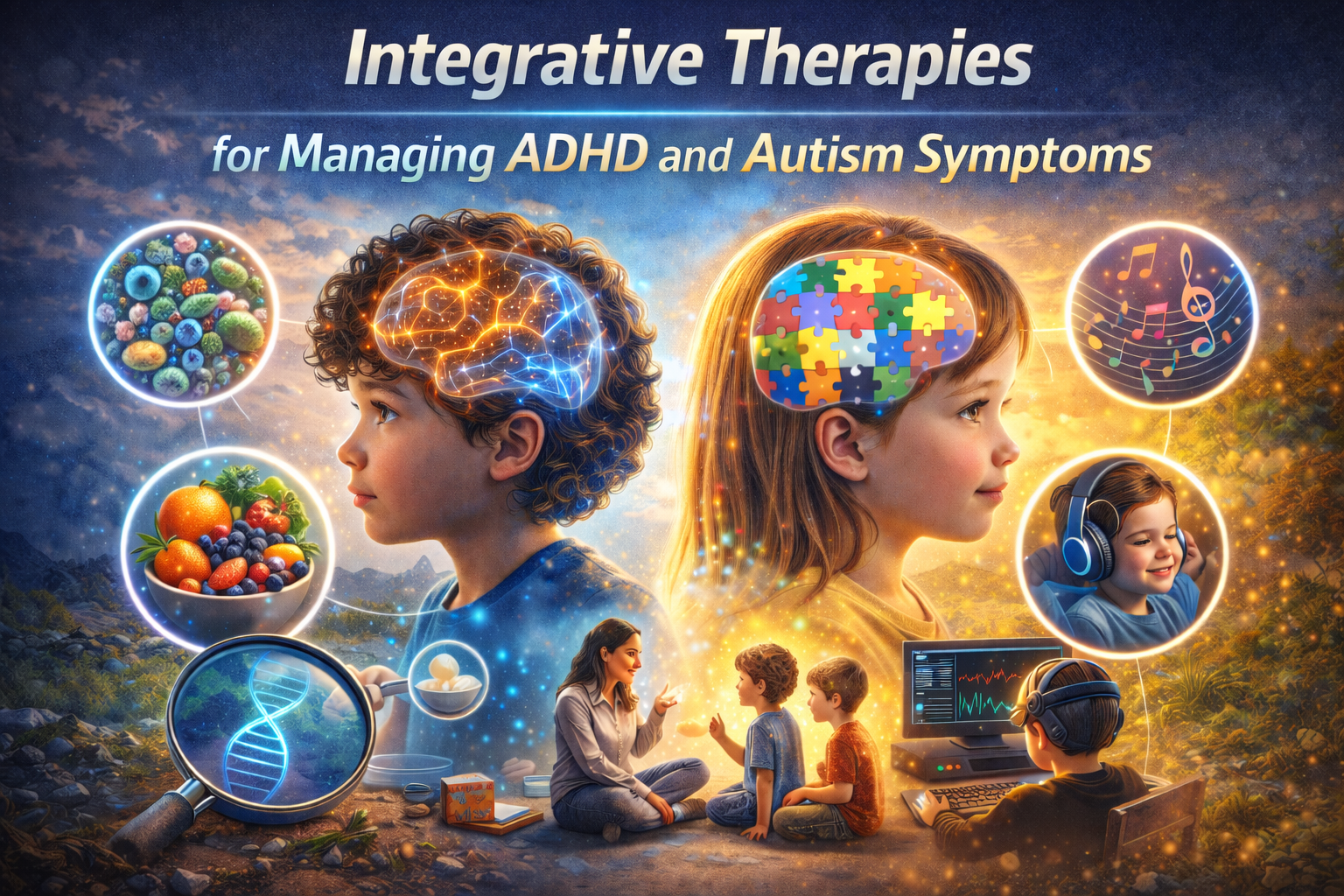
- Integrative therapies for managing ADHD and autism symptoms combine conventional treatments (like behavioral therapy and medication) with complementary approaches that support the whole person’s brain, body, and environment.
- These may include nutritional strategies (e.g., balanced diet, omega-3s), sleep optimization, physical activity, mindfulness, occupational and sensory integration therapy, speech therapy, and parent training. Some families also explore neurofeedback, yoga, or music therapy. The goal is to reduce symptoms such as inattention, hyperactivity, sensory overload, anxiety, and social challenges while improving emotional regulation and daily functioning.
- Integrative care is most effective when individualized, evidence-informed, and coordinated with healthcare professionals.
Attention Deficit Hyperactivity Disorder (ADHD) and Autism Spectrum Disorder (ASD) are neurodevelopmental conditions that present unique challenges across the lifespan. While conventional treatments such as behavioral therapy, medication, and educational support remain foundational, many individuals and families seek integrative therapy approaches to complement standard care. Integrative therapies blend conventional medicine with evidence-supported complementary modalities, addressing biological, psychological, and lifestyle-based needs holistically.
This article explores integrative strategies that support attention, executive function, sensory processing, emotional regulation, social skills, and overall well-being in people with ADHD and autism. We define key approaches, summarize current evidence, and offer practical guidance for clinicians and families.
Understanding ADHD and Autism: A Holistic Perspective
ADHD: Core Features and Neurobiology
ADHD is characterized by patterns of:
- Inattention
- Impulsivity
- Hyperactivity
Neurobiologically, ADHD involves dysregulation in dopaminergic and noradrenergic pathways, affecting executive functioning, working memory, motivation, and inhibition.
Autism Spectrum Disorder: Core Features
ASD presents through challenges in:
- Social communication
- Restricted or repetitive behaviors
- Sensory sensitivities
- Cognitive and language variability
Neurologically, autism is associated with atypical connectivity across brain networks, especially those linked to sensory processing, social cognition, and flexibility.
Why Integrative Therapies?
Conventional treatments are essential. However:
- Many individuals experience residual symptoms
- Pharmacologic approaches may produce side effects
- Functional challenges extend beyond core symptoms
Integrative therapies aim to enhance neurodevelopment, self-regulation, stress resilience, nutrition, sleep, and quality of life key domains central to successful functioning.
Foundational Pillars of an Integrative Approach
Individualized Assessment
Integrative therapy begins with a comprehensive intake:
- Developmental history
- Medical and psychiatric evaluation
- Lifestyle patterns (diet, sleep, activity)
- Sensory profiles
- Stress and coping styles
This creates a personalized roadmap rather than a “one-size-fits-all” plan.
Collaborative Care Team
Optimal outcomes often involve a multidisciplinary team:
- Primary care clinician / psychiatrist
- Behavioral therapist
- Occupational therapist (OT)
- Speech-language pathologist
- Nutritionist / dietitian
- Integrative health specialist
Team communication ensures unified goals and consistent support.
Emphasis on Strengths
Rather than focusing solely on deficits, integrative therapy highlights:
- Interests and talents
- Adaptive strategies
- Self-advocacy
- Family and community resources
This strength-based perspective fosters confidence and motivation.
Nutritional and Dietary Interventions
Nutrition plays a critical role in brain development and function. While food is not a “cure,” certain dietary strategies may support symptom management.
Balanced Macronutrients
Adequate protein, healthy fats, and complex carbohydrates stabilize:
- Blood glucose levels
- Neurotransmitter synthesis
- Energy and focus
Example: Protein at breakfast may reduce mid-morning attention lapses.
Omega-3 Fatty Acids
Omega-3s (EPA/DHA) are foundational for neuronal membrane health.
- Some evidence suggests improvements in attention and mood
- Typically sourced from fish oil or algae supplements
Therapeutic dosing should be individualized.
Micronutrients and ADHD
Children and adults with ADHD sometimes show lower levels of:
- Iron
- Zinc
- Magnesium
Supplementation, under clinician guidance, can support neurotransmitter pathways central to attention and impulse control.
Gluten/Casein Reduction (Controversial)
Some families report behavioral improvements with gluten- and casein-reduced diets.
While clinical evidence is mixed, targeted trials, especially when sensitivities exist, may be reasonable.
Blood Sugar Stabilization
Frequent mini-meals of low glycemic index foods can help reduce:
- Irritability
- Hyperactivity
- Attention shifts due to sugar spikes
Food Sensitivities and Gut Health
Emerging research links gut microbiome health to:
- Mood regulation
- Immune function
- Cognitive processing
Probiotic and prebiotic strategies may benefit specific individuals, particularly when gastrointestinal symptoms coexist.
Movement, Physical Activity, and Neurodevelopment
Exercise and ADHD
Physical activity enhances:
- Dopamine and norepinephrine availability
- Executive functioning
- Mood and stress regulation
Structured activities, such as martial arts, swimming, and team sports, can boost focus and self-discipline.
Sensory Motor Integration for Autism
Movement-based therapy, including:
- Balance and coordination exercises
- Vestibular activities
- Rhythmic movement
Helps regulate sensory processing and improves body awareness.
Yoga, Tai Chi, and Mindful Movement
These practices combine:
- Physical control
- Breathing regulation
- Cognitive focus
Studies indicate reductions in anxiety and behavioral reactivity are particularly beneficial for individuals with high sensory or emotional load.
Mind-Body Therapies
ADHD and ASD often involve dysregulated stress responses. Mind-body techniques support attention, emotional balance, and self-regulation.
Mindfulness Meditation
Mindfulness strengthens:
- Attentional control
- Emotional awareness
- Stress resilience
Adaptations for neurodiverse learners, such as shorter practices and sensory accommodations, make mindfulness accessible for youth and adults alike.
Breathing Techniques
Deep, patterned breathing activates parasympathetic pathways, reducing physiological arousal. Techniques include:
- Box breathing
- Alternate nostril breathing
- Diaphragmatic breath
These can be taught in therapy and practiced during moments of dysregulation.
Biofeedback and Neurofeedback
Biofeedback trains individuals to modify physiological activity (heart rate, muscle tension).
Neurofeedback uses real-time EEG data to support self-regulation of brain-wave activity related to attention and arousal.
Research shows promising results, especially for ADHD, though protocols require customization and clinician oversight.
Occupational and Sensory Integration Therapies
Sensory Integration Therapy (SIT)
OTs trained in sensory integration help individuals interpret and respond adaptively to:
- Touch
- Movement
- Sound
- Visual stimuli
This can reduce anxiety, improve focus, and support daily functioning.
Executive Function Coaching
Coaching focuses on:
- Time management
- Task organization
- Working memory strategies
Often beneficial for ADHD across ages, improving academic/work performance and reducing overwhelm.
Social Communication Support
Integrative health clinic often partner with speech-language pathologists to address:
- Reciprocal conversation skills
- Nonverbal communication
- Perspective-taking
Augmentative and alternative communication (AAC) may be integrated for individuals with language challenges.
Herbal and Nutraceutical Support
Herbal and nutraceutical interventions are common integrative options but require careful medical oversight due to interactions and variable evidence.
Herbal Supplements
Some botanicals are explored for cognitive and emotional support:
- Bacopa monnieri (attention and memory)
- Ginkgo biloba (cognitive processing)
- Rhodiola rosea (stress support)
These are not replacements for conventional treatment; appropriate dosing, quality sourcing, and safety screening are essential.
B-Vitamins and Methylation Support
B vitamins support:
- Neurotransmitter production
- Energy metabolism
- Homocysteine balance
Methylation pathways are particularly relevant for individuals with genetic variants like MTHFR.
Amino Acid Precursors
Amino acids like L-tyrosine (dopamine precursor) may support focus when used judiciously and with monitoring.
Sleep Optimization
Sleep disturbances are common in ADHD and autism and profoundly affect attention, behavior, and mood.
Sleep Hygiene Fundamentals
- Consistent sleep/wake schedule
- Reduced evening screen time
- Calming bedtime routines
- Sleep-friendly environment (dark, cool, quiet)
Melatonin Regulation
Melatonin supplementation under clinician guidance can regulate sleep onset, particularly in individuals with delayed circadian rhythms.
Addressing Underlying Sleep Disorders
Conditions like:
- Restless leg syndrome
- Sleep apnea
- Sensory disruption
Can significantly worsen daytime symptoms.
A comprehensive assessment, including sleep studies when needed, is critical.
Psychological and Behavioral Interventions
Cognitive-Behavioral Therapy (CBT)
CBT adapted for ADHD and autism supports:
- Emotional regulation
- Impulse management
- Problem-solving
For autism, therapies may include social cognition elements.
Acceptance and Commitment Therapy (ACT)
ACT emphasizes:
- Psychological flexibility
- Values-based action
- Nonjudgmental awareness
Effective for anxiety, which often co-occurs with ADHD and ASD.
Parent and Caregiver Training
Supporting parents/caregivers amplifies therapeutic gains through:
- Consistent behavior strategies
- Stress reduction
- Effective communication patterns
Environmental and Lifestyle Factors
Reducing Environmental Toxins
Some families explore the reduction of:
- Artificial additives
- Chemical exposures
- Pollutants
Although rigorous evidence is emerging, minimizing unnecessary toxic burden may support neurological health.
Structured Routines and Predictability
Predictable daily schedules reduce executive load and anxiety in both ADHD and autism.
Nature Exposure
Time in nature has measurable benefits on:
- Attention restoration
- Stress reduction
- Mood
Ecotherapy, gardening, and outdoor play are simple, accessible strategies.
Measuring Progress and Adjusting Plans
Integral to integrative therapy is ongoing assessment, including:
- Standardized questionnaires (attention, executive function, sensory scales)
- Functional goals (academic, social, daily living)
- Family and self-reported outcomes
Regular review enables refinement, adding modalities, tapering less effective interventions, and aligning with developmental stages.
Safety and Clinical Considerations
Evidence-Based Practice
Not all integrative therapies have equal evidence. Clinicians must:
- Distinguish promising from unsupported interventions
- Monitor for adverse effects
- Communicate realistic expectations
Medication Interactions
Supplements and herbs can interact with ADHD medications (stimulants, atomoxetine) or other neuropsychiatric treatments. Coordination between providers is essential.
Age and Development
Therapeutic suitability varies with age, especially for mindfulness, biofeedback, and sensory integration.
Case Examples: Integrative Pathways in Practice
Case: Childhood ADHD
Profile: 8-year-old with inattentiveness, impulsivity, and school challenges.
Integrative Plan:
- Nutritional optimization (balanced meals, omega-3 support)
- Sensorimotor play and structured physical activity
- Executive function coaching
- Behavioral therapy partner
- Parent training for routines and reinforcement
Outcomes: Improved attention, school performance, and structured family environment.
Case: Adolescent with Autism
Profile: 15-year-old with social anxiety, sensory overload, and sleep issues.
Integrative Plan:
- Occupational therapy with sensory integration
- Sleep hygiene + low-dose melatonin
- Social communication groups
- Mindful breathing and CBT for anxiety
- Family support for transition planning
Outcomes: Increased emotional regulation and social engagement, better sleep.
The Future of Integrative Care for ADHD and Autism
Research continues to grow in areas such as:
- Microbiome-brain connections
- Neurofeedback protocols
- Precision nutrition
- Wearable technology for self-regulation
Integrative care will increasingly integrate biomarkers, individualized monitoring, and predictive analytics alongside human-centered therapeutic support.
Conclusion
Integrative therapies offer a valuable complement to conventional approaches for ADHD and autism. By addressing nutrition, lifestyle, sensory needs, psychological resilience, movement, and family systems, integrative care promotes whole-person health, adaptive functioning, and improved quality of life.
Effective integrative treatment is:
- Individualized
- Evidence-informed
- Collaborative
- Strength-based
Clinicians and families working together can achieve meaningful progress across cognitive, emotional, behavioral, and social domains, helping individuals with ADHD and autism move toward their fullest potential.