30 seconds summary
- Circuit breakers are essential safety devices that protect homes and families from electrical dangers. They automatically stop electricity flow when they detect problems such as overloads or short circuits, helping prevent fires, appliance damage, and electrical injuries.
- Regular maintenance, professional inspections, and safe electrical habits ensure that circuit breakers continue to provide reliable protection.
- By investing in proper electrical safety systems, homeowners can create a safer environment and protect what matters most.
A home is more than just a building; it is a place where families create memories, find comfort, and feel protected. However, behind the walls, floors, and ceilings of every modern home lies a complex electrical system that powers essential appliances, lighting, heating, cooling, and entertainment devices. While electricity has made daily life easier and more convenient, it also carries potential risks if not properly managed. Electrical faults, overloads, and short circuits can lead to fires, damaged appliances, and serious injuries.
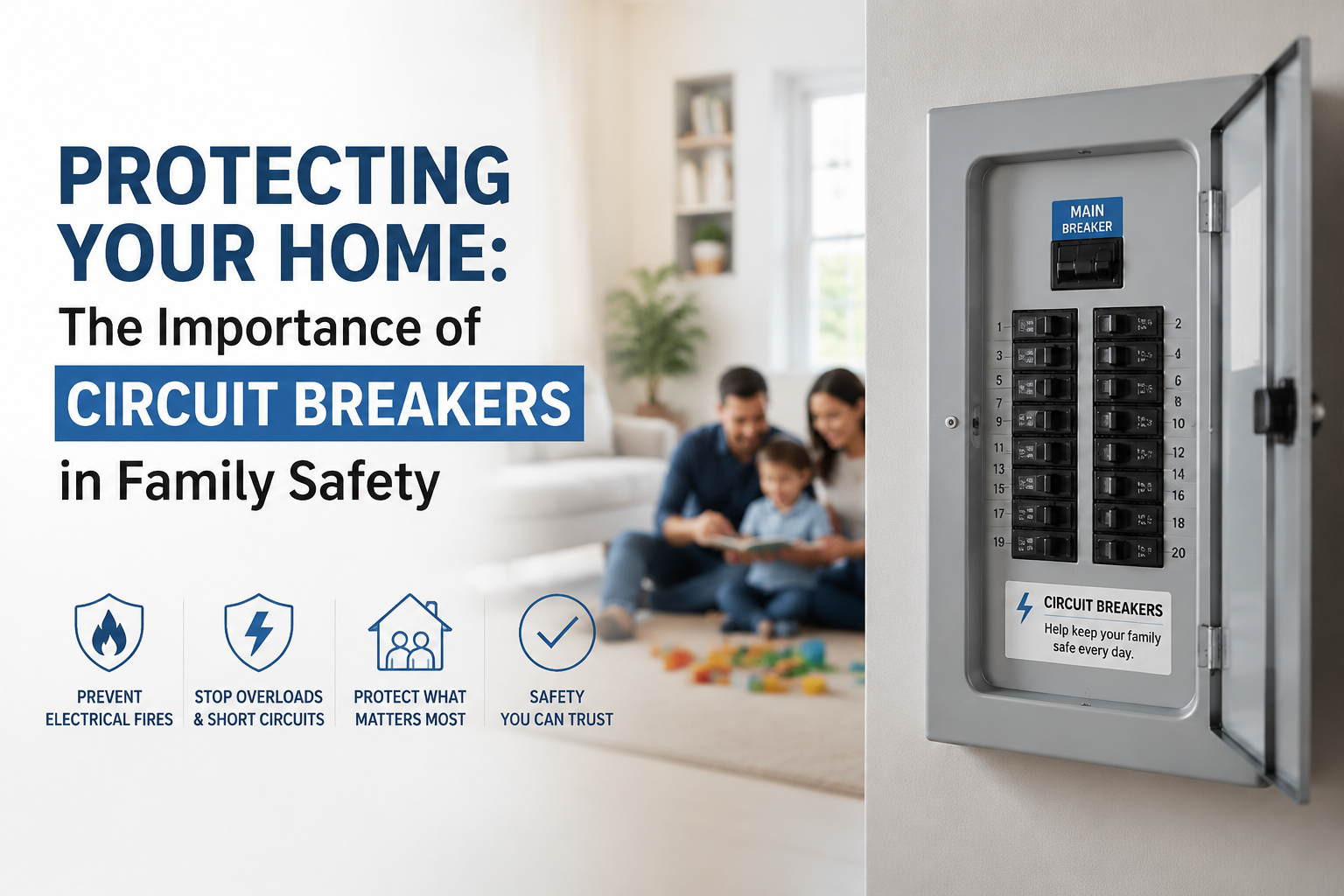
One of the most important safety devices designed to protect families from electrical dangers is the circuit breaker. A circuit breaker acts as a protective barrier between a household’s electrical system and potential hazards. It automatically interrupts the flow of electricity when it detects an unsafe condition, helping prevent accidents before they become dangerous situations.
Understanding the importance of circuit breakers, how they work, and how to maintain them properly can significantly improve family safety and provide peace of mind for homeowners.
Understanding the Role of Circuit Breakers
A circuit breaker is an automatic electrical switch designed to protect an electrical circuit from damage caused by excessive current. Electricity normally flows through wiring to power different devices and appliances. However, when too much electricity passes through the system due to an overload or fault, wires can become overheated and may cause fires.
The main purpose of a circuit breaker is to detect these dangerous conditions and quickly stop the flow of electricity. Unlike traditional fuses, which must be replaced after they break the circuit, circuit breakers can usually be reset once the problem has been identified and corrected.
In simple terms, a circuit breaker works like a safety guard for a home’s electrical system. It constantly monitors electrical flow and responds immediately when something goes wrong.
Preventing Electrical Fires
Electrical fires are among the most serious hazards that can occur in a home. Many electrical fires begin because of overloaded circuits, damaged wiring, faulty appliances, or improper electrical installations. When too much current flows through wires, the heat produced can damage insulation and ignite nearby materials.
Circuit breakers help reduce this risk by cutting off power when electrical conditions become unsafe. For example, if a family connects too many high-power appliances to one outlet, the circuit may become overloaded. Instead of allowing the wiring to overheat, the circuit breaker trips and stops electricity from flowing.
This quick response can prevent minor electrical issues from becoming major disasters. Although circuit breakers cannot eliminate every possible electrical risk, they are one of the most effective safety measures available in modern homes.
Protecting Family Members from Electrical Injuries
Electrical safety is especially important in homes with children, elderly family members, or individuals who may not recognize electrical dangers. Exposed wires, damaged appliances, and electrical faults can cause shocks, burns, or even life-threatening injuries.
Circuit breakers provide an additional layer of protection by disconnecting electricity when abnormal conditions occur. They help reduce the chance of prolonged exposure to dangerous electrical currents.
Some homes also use advanced safety devices, such as ground fault circuit interrupters (GFCIs), which provide extra protection in areas where water and electricity may come into contact, such as kitchens, bathrooms, and outdoor spaces. Together with circuit breakers, these devices create a safer environment for families.
Protecting Expensive Appliances and Electronics
Modern homes depend heavily on electronic devices, including televisions, computers, refrigerators, washing machines, and smart home systems. Electrical surges and unstable power conditions can damage these valuable items.
Circuit breakers help protect appliances by stopping excessive electrical flow. While they are not designed to control every type of power surge, they reduce the risk of damage caused by electrical overloads and short circuits.
For homeowners, this protection can prevent expensive repairs or replacements while also improving the overall reliability of household electrical systems.
How Circuit Breakers Work
To understand their importance, it helps to know how circuit breakers operate. Inside a circuit breaker is a mechanism that responds when electrical current exceeds a safe level.
In many traditional breakers, excessive current creates heat that causes the breaker mechanism to release and disconnect the circuit. Some modern breakers use electronic sensors to detect electrical problems more accurately and respond faster.
When a breaker trips, it moves to an “off” position, stopping electricity from reaching the affected circuit. After the cause of the problem has been addressed, the breaker can usually be switched back on.
However, repeated tripping should never be ignored. A breaker that frequently shuts off may indicate a deeper electrical problem that requires professional inspection.
The Importance of Regular Electrical Maintenance
Although circuit breakers are designed to provide long-term protection, they still require proper maintenance. Homeowners should regularly inspect their electrical panels and pay attention to warning signs such as:
- Frequent breaker trips
- Burning smells near the electrical panel
- Buzzing or unusual sounds
- Warm or damaged outlets
- Flickering lights
- Visible signs of corrosion or damage
Ignoring these signs can increase the risk of electrical failures. A qualified electrician can inspect the system, identify problems, and ensure that circuit breakers are functioning correctly.
Regular electrical inspections are especially important in older homes, where outdated wiring or electrical panels may not meet modern safety requirements.
Choosing the Right Circuit Breaker System
Not all electrical systems are the same, and the correct circuit breaker setup depends on the size, design, and electrical demands of a home. A professional electrician can determine the appropriate breaker ratings and ensure that circuits are properly distributed.
Using the wrong type of breaker or installing one incorrectly can create additional risks. Electrical work should always follow safety standards and regulations to ensure reliable protection.
Homeowners should avoid attempting complicated electrical repairs without proper knowledge and training. Professional installation and maintenance help ensure that the electrical system operates safely.
Teaching Families About Electrical Safety
While circuit breakers provide important protection, family members should also understand basic electrical safety practices. Children should be taught not to play with outlets, wires, or electrical devices. Adults should avoid using damaged cords and should unplug appliances when they are not needed.
Simple habits can make a major difference:
- Do not overload outlets with multiple devices.
- Keep electrical appliances away from water.
- Replace damaged cords immediately.
- Avoid using electrical equipment that shows signs of damage.
- Keep the electrical panel accessible.
A combination of safe behavior and protective equipment creates the strongest defense against electrical accidents.
The Role of Modern Technology in Electrical Safety
Advancements in electrical technology have improved home safety systems significantly. Smart circuit breakers and connected electrical monitoring systems now allow homeowners to track energy usage, receive alerts, and identify possible problems before they become serious.
These modern solutions can provide additional information about household electricity consumption and help families make safer decisions. As homes become more dependent on technology, intelligent electrical protection systems will continue to play an important role.
Why Every Home Needs Reliable Circuit Protection
Every family deserves a safe living environment, and reliable electrical protection is a key part of achieving that goal. Without proper protection, small electrical problems can quickly become dangerous emergencies.
A properly installed and maintained circuit breaker system protects lives, reduces property damage, and improves confidence in a home’s electrical infrastructure. It is a small but powerful device that works silently in the background every day.
Many homeowners only think about their electrical system when something goes wrong. However, preventive safety measures are far more effective than dealing with the consequences of an electrical accident. Investing in quality circuit protection is an investment in family security.
Conclusion
Protecting a home requires attention to many areas of safety, and electrical safety should always be a priority. Circuit breakers play a vital role in preventing electrical fires, reducing injury risks, and protecting valuable household equipment.
By understanding how circuit breakers work, maintaining electrical systems regularly, and practicing safe electrical habits, families can create a safer and more secure home environment. These devices may be hidden inside an electrical panel, but their contribution to family safety is enormous.
A reliable circuit breaker system is not just a piece of electrical equipment; it is an essential safeguard that helps protect the people and possessions that matter most.