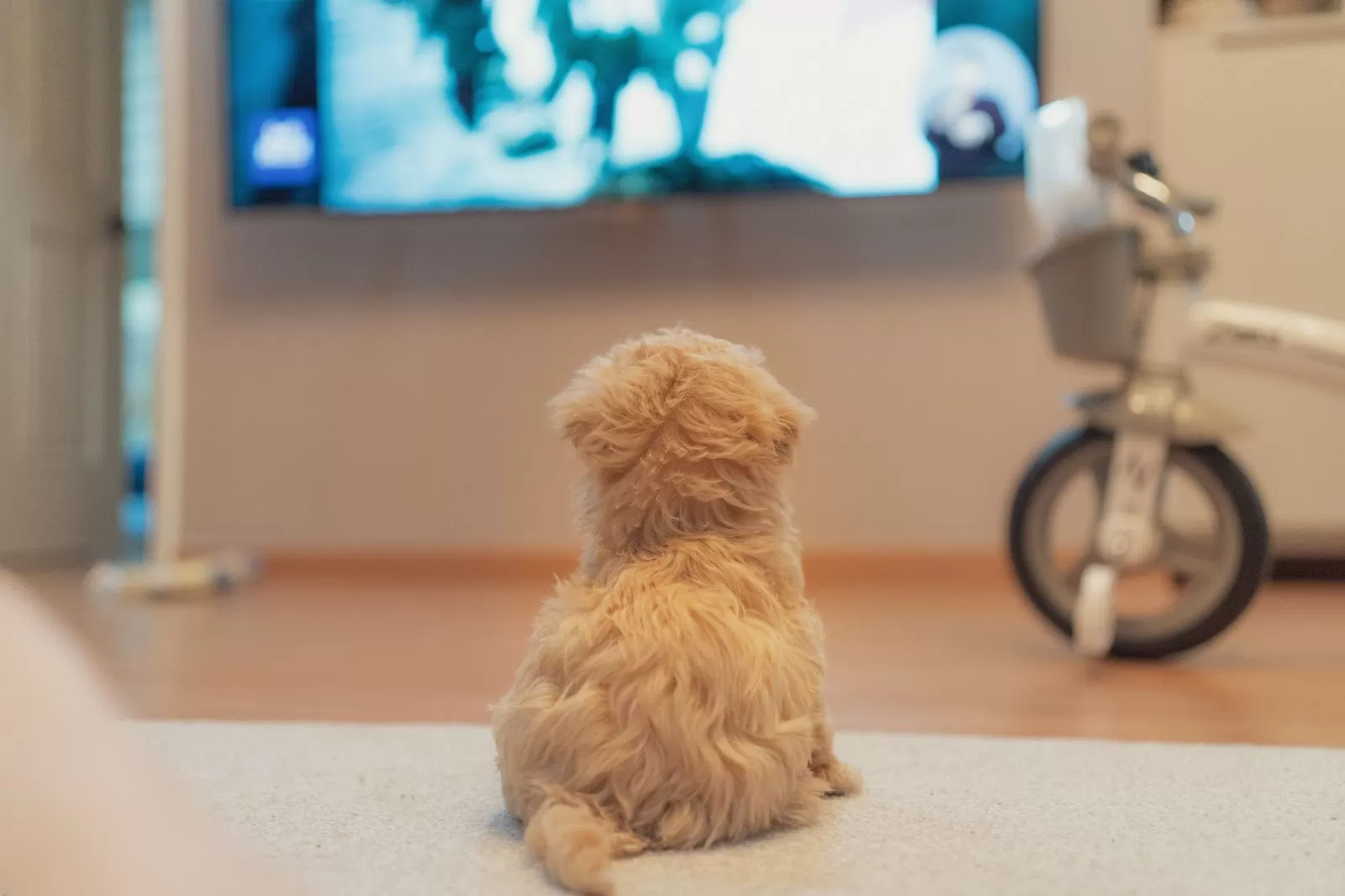
Seeking someone else’s suggestion for our pet is completely normal. As pet owners, we often observe our canine companions watching television; it makes us wonder what dogs truly perceive. This fascinating blog post will explore the science and habits of four-legged friends captivated by moving images on high-definition screens.
We’ll fetch answers for your questions about their vision and preferences for certain programs. Modern technology has revolutionized the viewing experience for a furry friend, as older TV models with flickering images are gone.
Faster refresh rates on television screens mean dogs perceive smooth motion, making content like shows made for dogs (lights, camera, action!) more accessible and engaging. It’s easier to see why your dog watching the screen might stare, bark, or wag their tails!
How Do Pets Perceive TV Screen?
Pets perceive TV differently from humans due to their dichromatic vision and higher motion sensitivity. They mainly see blues and yellows, detect flickers faster, and react more to moving images and sounds than to still visuals. Modern high refresh rate screens help them see smoother motion, making shows with animals, nature, and familiar sounds more engaging.
Can Pets Understand TV?
Dogs absolutely can watch TV, and many seem to enjoy it. When I first noticed my own pup staring at the screen, I realized how certain features about television shows capture their attention.
Some parts are visual, like motion, while others are linked to the sounds coming from the TV. Dog eyes differ greatly from human eyes, so they see things on TV differently, which changes how they react to moving images.
Their vision isn’t as sharp, closer to 20/75 than 20/20, and that might explain why they prefer to sit closer to the TV—it helps them keep the images sharp. They also have different color perceptions, having only two types of color-processing cells while we have three.
They can only see blues, greens, and yellows. For example:
- A dog running on grass with a blue sky and a yellow frisbee looks exciting.
- But a dog beside a red toy or picnic table might look dull.
Dogs also have more rods in their eyes, which improves night vision and makes them highly sensitive to motion. That’s why they can detect even the smallest movements on screen.
Interestingly, dogs perceive the image differently, especially on older TVs. While humans don’t notice flickering beyond 55 hertz, dogs can see flickers up to 75 hertz—making an average TV show at 60 hertz appear flickery to them.
Thankfully, newer TVs refresh faster, so now both humans and pups enjoy smoother pictures. Whether it’s running to the screen during Flow or hiding during Severance, pets react to what’s on television, showing their unique way of seeing the world.
How Dogs Process Television Screens and Sounds?
Dogs see the world differently than humans because their dichromatic vision allows them to notice only blues and yellows, while other colors appear in shades of gray. Their visual processing helps them perceive television content in unique ways, making some shows more appealing than others.
I’ve noticed my own furry friends stare longer at fast movement or vibrant blues on the screen rather than lush greens or reds. Their visual acuity is also different from ours, often around 20/60 or 20/75 compared to human 20/20 vision. Because of this, dogs tend to sit closer to the TV screen to see images clearly.
They detect flicker fusion frequency faster, so motion may look like rapid frames in an action movie, almost like a flipbook. This unique perception and sensitivity to movement show how our companions interpret the digital realm in ways we can’t.
Do Dogs Know That TV Isn’t Real?
When dogs watch TV, their thinking may differ from ours. Some animals recognize other figures on a screen, respond to barking, or notice moving images and sounds made by animated shows like Flow. But their senses, especially smell, cause a disconnect with what’s televised, since they can’t sense real presence through a screen or pixels built for human vision.
From my experience, a dog may show interest when research-backed studies note movement or colors that their species perceive differently.
- They might react quickly to motion, not photos.
- Some show distressed behavior at audio recorded animal sounds.
- This exhibition of interest depends on many reasons, like how skewed images or shows appear in their world. The information communicated may be limited, but it’s fascinating to watch how our companions connect in their own time.
Why Do Some Pets Like to Watch TV?
Through my research and personal time spent with dogs, I’ve noticed that their preferences for television content or programs differ greatly. Some dogs react to fast moving objects, creatures, or sports broadcasts with balls, while others love nature documentaries, wildlife footage, and shows filled with sound effects.
Their reactions vary by breed, age, and personality, with certain individual pets showing more enthusiasm toward on-screen activity than others. From my experience, dogs often show enjoyment in TV because their sight capacity lets them see what’s happening on the screen and stay engaged.
Their strong sense of smell and hearing help them recognize familiar noises like barking or squeaking toys, which triggers their curious nature to investigate.
- They may respond to visual movement as if it’s real-life action, especially in an animal movie or fun show.
- This social interaction mimics time spent with human companions, offering entertainment for both puppies and people.
Should Pets Watch TV?
Many pets like dogs or cats may seem curious when they watch television, but whether they should or not depends on their behavior and viewing habits. Some dogs get excited, while others stay calm or relaxed beside their owners. The jury is still out on how beneficial it truly is, but it can offer mental stimulation and entertainment for your furry friend when used wisely.
Benefits of Pet’s TV Time
Mental Stimulation
Dog-specific programming or dog-focused channels filled with movement, people, and animals can keep pups engaged and content. Such shows or movies can have a calming effect through soothing sounds and images, especially during bedtime or after an active day. It’s a simple form of environmental enrichment that adds variety to their routine.
A Substitute for Companionship
When pets are left alone, television or radio can reduce separation anxiety. It acts as a substitute for real-world interaction, providing a sense of companionship. For example, leaving the TV on during crate training in a confined room can make your pet feel less anxious and more secure.
Encouraging Positive Behavior
Through TV time, pet owners can encourage positive experiences. Observing your pet’s body language helps you notice if they’re anxious, engaged, or simply relaxing. When my dog watches TV, she often curls beside me, showing she feels safe and enjoys the shared experience.
Supporting Socialization and Learning
Certain canine companions respond to programming designed for dogs, where puppies are frolicking or people are playing. Watching controlled environment videos can help desensitize them to real-life interactions with animals and people, making socialization easier later.
A Shared Relaxing Moment
In my home, spending quality time watching a TV show or movie together helps us bond. Dogs are curious creatures, and when they observe quietly by your side, that shared connection feels true and comforting. Sometimes, simply watching them sleep as the screen flickers reminds you how much joy these little companions bring.
Considerations for Pet’s TV Time
While television offers entertainment, it shouldn’t substitute outdoor exercise or social activities. Real-world interaction, playtime, and outdoor exposure remain vital. Owners should monitor volume, limit screen time, and keep it as part of a balanced routine rather than constant TV watching.
What Do Pets Like to Watch on TV?
From my own research and time spent observing dogs, I’ve seen their preferences on television depend a lot on content and programs that show animals or fast-moving objects. Some creatures on sports broadcasts like balls in play grab their attention more than still nature documentaries.
- Wildlife footage and shows with realistic sound effects often keep them most engaging, especially when the breed, age, or personality of the dogs make them more reactive to on screen motion.
- I’ve noticed my own dog’s reaction changes sometimes enthusiasm, sometimes curiosity depending on the factors that vary with individual preferences.
Some dogs are more drawn to sports programs, others prefer documentaries featuring animals or wildlife. Their interest in these television programs can significantly differ, making each dog’s personality quite distinct.
When testing how dogs watch a TV show, I’ve seen that colors on the screen, especially shades of blues, yellows, and greens play a huge role. My dog’s eyes follow the action, tail wagging when happy, or growling when distressed, proving that light, color, and motion deeply affect how animals react.
Tips for Ideal Pets’ TV Time
Choose Engaging and Appropriate Programs
When choosing television programs, I always pick content with animal or nature scenes and visuals that easily capture my dog’s attention. The sounds and levels should feel appropriate, never too loud, to keep the viewing enjoyable.
Shows with real animals or animated films work best since they match their visual capabilities and behaviors.
Create a Relaxing and Positive Space
I like setting the TV at eye level with blankets, cushions, and an inviting setup to help my pets relax. A cozy space makes watching television feel like a positive habit linked with enjoyment.
Owners who understand their pet’s comfort notice fewer distress reactions and more positive feelings during programming.
Start Slowly and Observe Reactions
When I introduce my dogs to TV, I gradually show short clips or videos featuring action scenes and observe their response. I monitor and adjust accordingly since every pet tunes in at a different pace.
Scientists continue research on how dogs and cats perceive screens and interact with technology to avoid harm and enhance benefits.
Use Interactive and Stimulating Activities
I sometimes combine interactive apps, games, or activities displayed on the screen that are specifically designed to keep pets entertained and stimulating for their senses. It helps engage them in different forms of tech without overstimulation.
A study showed that interactive programming tailored for dogs prevents spooked reactions and supports healthy behaviors.
Reinforce Positive Viewing Habits
Whenever my dog stays calm while watching TV, I reward it with treats, praise, or gentle reinforcement. This builds a connection between enjoyable experiences and television viewing, keeping it good for future sessions.
Some people even use an automatic feeder to record messages that tune with their pet’s night viewing, ensuring enjoyment without harm.
Final Verdict
- Pets can watch TV, but only in moderation. Short, calm viewing sessions with appropriate content can offer mental stimulation and comfort, especially for dogs and cats that enjoy movement and sound.
- However, owners should monitor reactions, limit screen time, and combine TV with play and training to prevent overstimulation and keep pets’ experiences healthy and enjoyable.