30-Second Summary
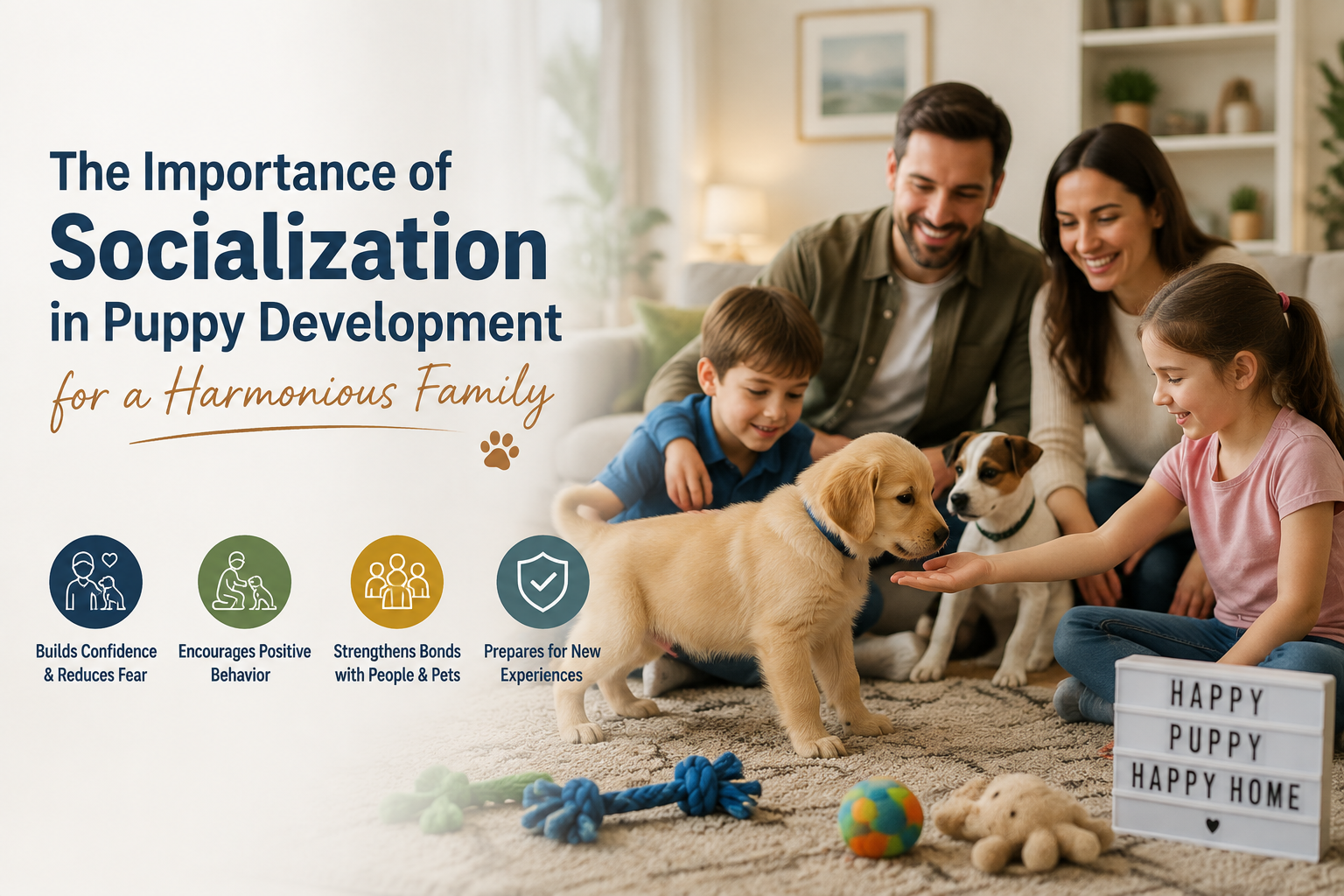
- Socialization is a vital part of puppy development because it helps dogs become confident, friendly, and well-adjusted family members. By introducing puppies to different people, animals, environments, and experiences in a positive way, owners can prevent fear and behavioral problems.
- Proper socialization strengthens the bond between dogs and families, improves training, and creates a safer and more harmonious home.
- A well-socialized puppy grows into a companion that can confidently participate in family life and build lasting relationships.
Bringing a puppy into a family is an exciting experience filled with happiness, companionship, and new responsibilities. A puppy is not simply a pet; it becomes a member of the household and develops emotional connections with everyone around it. However, creating a strong and positive relationship with a puppy requires more than providing food, shelter, and medical care. One of the most important aspects of raising a well-adjusted dog is proper socialization during its early stages of life.
Socialization is the process of introducing a puppy to different people, animals, environments, sounds, experiences, and situations in a safe and positive way. It helps puppies understand the world around them and develop confidence. A properly socialized puppy is more likely to become a calm, friendly, and obedient adult dog that can peacefully live within a family environment.
Without proper socialization, puppies may develop fear, anxiety, aggression, or unwanted behaviors. These problems can create stress for both the dog and the family. On the other hand, a puppy that receives positive social experiences learns how to communicate, adapt, and interact appropriately. Whether someone owns a small companion breed or a larger working dog such as a German Shepherd puppy, early socialization plays a major role in shaping the dog’s personality and behavior.
Understanding Puppy Socialization
Puppy socialization begins during the earliest weeks of life. The first few months are considered a critical learning period because puppies are naturally curious and more open to new experiences. During this time, their brains develop rapidly, allowing them to form important associations about people, places, and situations.
Socialization does not mean forcing a puppy into every possible situation. Instead, it involves carefully introducing new experiences while making sure the puppy feels safe and comfortable. Positive experiences help puppies build confidence, while frightening or overwhelming experiences can create long-lasting fears.
A puppy learns through observation and interaction. The way family members respond to new situations influences how the puppy reacts. If owners remain calm and confident, puppies are more likely to feel secure. If owners show fear or stress, puppies may interpret those emotions as warnings.
The goal of socialization is not to make a puppy love everything and everyone instantly. The goal is to help the puppy learn that the world is safe and manageable.
The Role of Socialization in Building Confidence
Confidence is one of the greatest benefits of proper puppy socialization. A confident dog is better able to handle changes, unfamiliar environments, and unexpected situations.
For example, a puppy that has been introduced to different household sounds such as vacuum cleaners, doorbells, televisions, and kitchen noises is less likely to panic when hearing them as an adult. Similarly, puppies that experience different surfaces like grass, pavement, carpets, and wooden floors become more comfortable moving through various environments.
A confident puppy is also easier to train. Dogs that feel secure are more willing to learn commands, explore new situations, and cooperate with their owners. Confidence reduces stress and allows dogs to make better decisions.
In a family setting, confidence helps create harmony because the dog is less likely to react negatively to normal daily activities. Visitors, children playing, household changes, and outdoor activities become easier for a well-socialized dog to handle.
Strengthening the Human-Dog Bond
Socialization is essential for developing a strong relationship between a puppy and its family. Every positive interaction builds trust and teaches the puppy that humans are sources of comfort, guidance, and care.
Simple activities such as gentle handling, playtime, training sessions, and regular interaction help puppies understand their role within the family. When family members spend quality time with a puppy, they create emotional connections that last throughout the dog’s life.
A puppy that trusts its owners is more likely to listen, follow guidance, and seek support when feeling uncertain. This bond improves communication between humans and dogs, making everyday life more enjoyable.
Training and socialization work together. A puppy that has learned to focus on people and remain calm in different situations will respond better to training. This creates a positive cycle where good behavior is encouraged and rewarded.
Preventing Fear and Behavioral Problems
Many common dog behavior problems are connected to insufficient socialization. Fear is one of the biggest causes of unwanted behaviors. A dog that has not experienced different people, animals, or environments may react with barking, hiding, growling, or even aggression.
For example, a puppy that never meets strangers may become nervous whenever guests enter the home. A puppy that is not exposed to other dogs may struggle with communication and become uncomfortable during walks or visits to parks.
Early socialization helps prevent these issues by teaching puppies appropriate responses. Instead of viewing new experiences as threats, they learn to observe and adapt.
This is especially important for larger or more powerful breeds. A well-socialized German Shepherd puppy, for example, can grow into a loyal and protective companion while still being comfortable around family members, guests, and other animals. Without proper guidance, even intelligent and loving breeds can develop anxiety or overprotective behaviors.
Socialization and Family Safety
A harmonious family environment depends on safety and mutual understanding. A properly socialized dog is generally easier to manage because it understands boundaries and responds appropriately to different situations.
Families with children especially benefit from socialization. Puppies need to learn how to interact gently and respectfully. At the same time, children should be taught how to treat dogs with kindness and recognize when a puppy needs space.
Supervised interactions between puppies and children help both sides learn. The puppy learns appropriate behavior, while children learn responsibility and compassion.
Socialization also helps dogs become comfortable with necessary experiences such as veterinary visits, grooming, nail trimming, and handling. A dog that accepts these activities calmly experiences less stress, and owners can provide better care throughout the dog’s life.
Introducing Puppies to Different Experiences
Effective socialization involves exposing puppies to a wide variety of positive experiences. Some important areas include:
Meeting Different People
Puppies should meet people of different ages, appearances, voices, and behaviors. This helps them understand that humans come in many forms and are not automatically threatening.
Meeting visitors, neighbors, children, and people wearing different clothing or accessories can prevent fear-based reactions later in life.
Experiencing Different Environments
Taking puppies to safe locations allows them to become comfortable in different surroundings. Walks, outdoor areas, pet-friendly places, and new rooms provide valuable learning opportunities.
Each experience should be introduced gradually and positively.
Learning About Sounds
The world contains many unfamiliar noises. Cars, sirens, thunderstorms, appliances, and construction sounds can frighten puppies if they are not introduced properly.
Playing sounds at low volume and rewarding calm behavior helps puppies develop confidence.
Interacting With Other Animals
Controlled interactions with healthy and vaccinated animals teach puppies proper communication skills. Dogs learn important social signals through interaction with other dogs.
However, these interactions should always be supervised to ensure safety and prevent negative experiences.
The Importance of Positive Reinforcement
Positive reinforcement is one of the most effective methods for socializing puppies. This approach involves rewarding desired behaviors rather than punishing mistakes.
When puppies calmly approach new experiences, receive praise, treats, or affection, they learn that those situations are rewarding. This encourages them to repeat confident behavior.
Punishment during socialization can create fear and damage trust. If a puppy reacts nervously to something unfamiliar, forcing the puppy or using harsh corrections may make the fear worse.
Patience, encouragement, and consistency are essential. Every puppy learns at a different pace, and successful socialization depends on respecting the individual dog’s comfort level.
Socialization Throughout a Dog’s Life
Although puppyhood is the most important period for socialization, learning should continue throughout a dog’s life. Dogs experience changes such as moving homes, meeting new people, and adapting to new routines.
Regular positive experiences help maintain confidence and prevent behavioral problems from developing.
Adult dogs can also learn new behaviors and become more comfortable in unfamiliar situations. Continued socialization strengthens the relationship between dogs and their families.
The Family’s Responsibility in Puppy Development
Raising a socially confident puppy requires teamwork from the entire family. Everyone in the household should follow consistent rules and provide positive interactions.
Family members should agree on training methods, boundaries, and expectations. Mixed messages can confuse puppies and slow their learning process.
Daily activities such as feeding, walking, playing, and training provide opportunities for social development. A puppy does not learn only during formal training sessions; it learns from every interaction.
Owners should also recognize that puppies have emotional needs. Rest, patience, affection, and mental stimulation are all important parts of healthy development.
Conclusion
Socialization is one of the most important foundations of puppy development. It shapes how dogs understand people, environments, and experiences. A properly socialized puppy grows into a confident, friendly, and emotionally balanced adult dog.
A harmonious family does not happen automatically when bringing a puppy home. It is created through patience, training, communication, and positive experiences. By investing time in socialization during puppyhood, families can prevent many behavioral challenges and build a lifelong bond based on trust and understanding.
Every puppy deserves the opportunity to explore the world safely and confidently. Through thoughtful socialization, owners can help their puppies become wonderful companions who bring happiness, loyalty, and companionship to the family for many years.