30 seconds summary
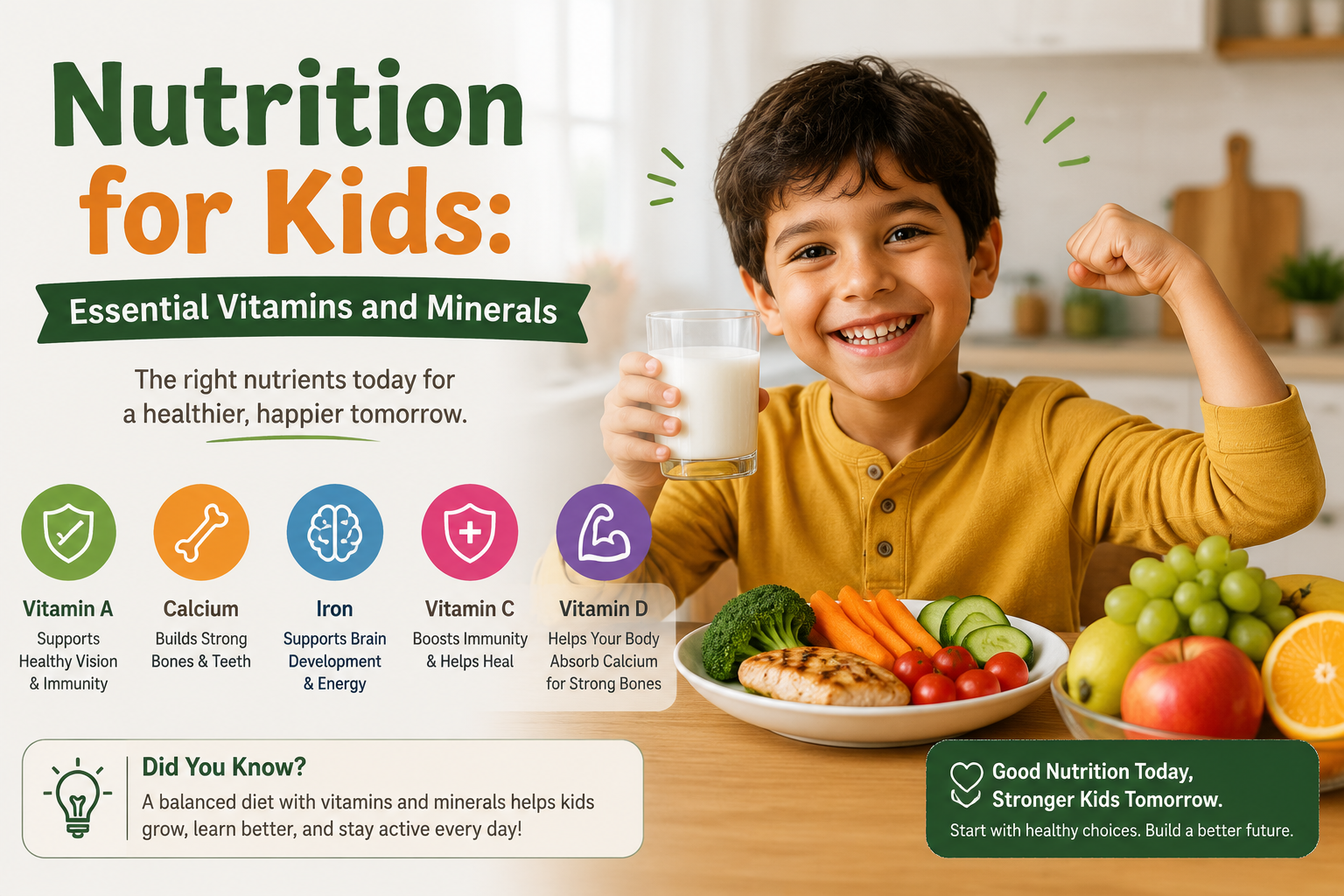
- A balanced diet helps children grow, learn, and stay healthy. Essential vitamins like A, C, D, and B vitamins support vision, immunity, energy, and brain development.
- Important minerals such as calcium, iron, and zinc strengthen bones, carry oxygen, and support growth.
- Kids should eat a variety of fruits, vegetables, whole grains, dairy or alternatives, and protein-rich foods to get these nutrients. Healthy eating habits from an early age build a strong foundation for lifelong wellness.
Nutrition is one of the most important factors influencing a child’s growth, development, and overall well-being. During childhood, the body experiences rapid changes, including the development of bones, muscles, organs, and the brain. A healthy diet provides the energy and nutrients children need to grow properly, stay active, fight illnesses, and perform well at school.
Children require a wide range of nutrients, including carbohydrates, proteins, healthy fats, vitamins, and minerals. While macronutrients provide energy, vitamins and minerals support essential body functions such as immunity, bone formation, brain development, and metabolism. Developing healthy eating habits during childhood can also influence food choices and health throughout life.
Many children, however, may not consume all the nutrients they need every day. Picky eating habits, busy routines, limited food choices, or increased nutritional needs during growth periods can create nutritional gaps. Kids nutrition drinks can be helpful in such situations by providing additional vitamins, minerals, and other important nutrients as part of a balanced diet.
The Importance of Vitamins and Minerals for Kids
Vitamins and minerals are essential micronutrients that help children’s bodies function properly. Although children need them in small amounts, these nutrients play major roles in growth and development. They support the immune system, strengthen bones and teeth, help produce energy, and contribute to healthy brain function.
A child who receives adequate vitamins and minerals is more likely to maintain healthy growth, have better energy levels, and develop strong physical and mental abilities. Nutrient deficiencies, on the other hand, may affect concentration, immunity, and normal development.
A balanced diet containing fruits, vegetables, dairy products, whole grains, lean proteins, and healthy fats is the best way for children to receive essential nutrients. When diet alone does not provide enough nutrients, fortified kids nutrition drinks may help support a child’s nutritional needs.
Vitamin A: Supporting Vision and Immune Health
Vitamin A is an important nutrient that supports healthy eyesight, especially the ability to see in low-light conditions. It also plays a significant role in maintaining healthy skin, tissues, and immune system function.
Children can obtain vitamin A from foods such as carrots, sweet potatoes, spinach, pumpkin, eggs, and dairy products. These foods provide natural sources of vitamin A that contribute to overall growth and health.
Some children may have difficulty eating enough vegetables or other vitamin A-rich foods. In these cases, fortified nutrition drinks may provide additional vitamin A to help support normal development and immunity.
B Vitamins: Energy Production and Brain Development
The B vitamin group includes several nutrients that are important for children’s growth. These include vitamin B1, B2, B3, B6, B12, and folate. Together, these vitamins help convert food into energy and support the normal functioning of the brain and nervous system.
Vitamin B12 and folate are especially important because they help produce healthy red blood cells and support normal cell development. Children who consume a varied diet that includes meat, eggs, dairy products, beans, and whole grains can usually meet their B vitamin requirements.
Kids nutrition drinks often contain B vitamins because they support energy metabolism and help children maintain active lifestyles.
Vitamin C: Strengthening Immunity and Supporting Growth
Vitamin C is well known for supporting a healthy immune system. It also helps the body produce collagen, a protein needed for healthy skin, gums, blood vessels, and tissues. Another important function of vitamin C is improving the absorption of iron from plant-based foods.
Fruits and vegetables such as oranges, strawberries, kiwi, tomatoes, broccoli, and bell peppers are excellent sources of vitamin C. Since the body does not store large amounts of vitamin C, children need regular intake through their diet.
Many kids’ nutrition drinks include vitamin C to support immune health and provide additional nutritional benefits.
Vitamin D: Essential for Strong Bones and Teeth
Vitamin D is one of the most important nutrients for growing children because it helps the body absorb calcium. Calcium and vitamin D work together to build strong bones and teeth during childhood.
Children can receive vitamin D through sunlight exposure, fortified milk, eggs, fish, and fortified foods. However, children who spend limited time outdoors or consume few vitamin D-rich foods may not get enough.
Nutrition drinks fortified with vitamin D can help support bone development and contribute to healthy growth when included as part of a balanced diet.
Vitamin E and Vitamin K: Supporting Body Functions
Vitamin E acts as an antioxidant that helps protect body cells from damage. It also supports immune function and overall health. Foods such as nuts, seeds, vegetable oils, spinach, and avocados provide vitamin E.
Vitamin K is important for normal blood clotting and contributes to healthy bones. It is commonly found in green vegetables such as spinach, kale, and broccoli.
A varied diet that includes different fruits, vegetables, and healthy foods usually provides enough vitamin E and vitamin K for children.
Calcium: Building Strong Bones and Teeth
Calcium is a major mineral required for healthy bone and tooth development. Childhood and adolescence are important periods for building bone strength, making adequate calcium intake essential.
Dairy products such as milk, yogurt, and cheese are common sources of calcium. Fortified plant-based beverages and some vegetables can also contribute to calcium intake.
Children who do not consume enough calcium-rich foods may benefit from calcium-fortified kids nutrition drinks. These products can provide additional support for growing bones when combined with healthy meals.
Iron: Supporting Energy and Learning
Iron is essential for producing hemoglobin, a substance in red blood cells that carries oxygen throughout the body. Adequate iron levels support energy, concentration, brain development, and physical growth.
Iron can be found in foods such as meat, poultry, beans, lentils, spinach, and fortified cereals. Children who do not consume enough iron may experience tiredness, difficulty concentrating, or reduced energy.
Some kids’ nutrition drinks contain iron to help support children’s nutritional needs, particularly those who may have limited sources of iron in their regular meals.
Zinc: Growth and Immune Support
Zinc is an important mineral that supports children’s growth, immune system function, and the body’s ability to heal wounds. It also plays a role in normal development.
Foods rich in zinc include meat, seafood, dairy products, beans, nuts, and whole grains. Since zinc is involved in many important body processes, children need consistent intake through their diet.
Fortified nutrition drinks may include zinc to help support healthy growth and immunity.
The Role of Kids Nutrition Drinks
Kids nutrition drinks are specially designed beverages that provide additional nutrients to support children’s dietary needs. They may contain vitamins, minerals, protein, carbohydrates, fiber, and healthy fats.
These drinks can be useful for children who are picky eaters, have small appetites, participate in many activities, or struggle to consume a balanced diet. They offer a convenient way to provide important nutrients when regular meals may not be enough.
However, kids’ nutrition drinks should not replace healthy meals. Whole foods provide important benefits, including natural fiber, different textures, and opportunities for children to develop healthy eating habits.
Choosing the Right Kids Nutrition Drink
When selecting a nutrition drink for children, parents should consider the nutrient content, ingredients, and the child’s individual needs. A good option should provide important nutrients such as calcium, vitamin D, iron, zinc, vitamin C, and B vitamins.
Parents should also pay attention to sugar levels because some drinks may contain high amounts of added sugar. Choosing products with balanced nutrition and appropriate ingredients can help support children’s health without adding unnecessary calories.
Children with allergies, dietary restrictions, or specific health concerns may require specialized products. Consulting a healthcare professional can help parents choose the most suitable option.
Healthy Eating Habits Alongside Nutrition Drinks
Although nutrition drinks can provide nutritional support, children benefit most from eating a variety of whole foods. Parents can encourage healthy habits by offering colorful fruits and vegetables, including protein-rich foods, serving balanced meals, and creating a positive mealtime environment.
Children should be encouraged to try new foods without pressure. Repeated exposure to different foods can help children become more comfortable with new flavors and textures.
A healthy lifestyle also includes regular physical activity, enough sleep, and proper hydration.
Conclusion
Essential vitamins and minerals play a vital role in children’s growth, development, and long-term health. Nutrients such as vitamin A, vitamin C, vitamin D, calcium, iron, and zinc support important functions including immunity, brain development, strong bones, and energy production.
A balanced diet remains the foundation of good nutrition, but kids nutrition drinks can provide additional support when children have difficulty meeting their nutritional needs through food alone. When chosen carefully and used appropriately, these drinks can complement healthy eating habits and help children receive the nutrients they need.
By focusing on balanced meals, encouraging positive food choices, and providing nutritional support when necessary, parents can help children build a strong foundation for lifelong health.